Evaluating the Christmas Pajama Shirt Design for Embroidery
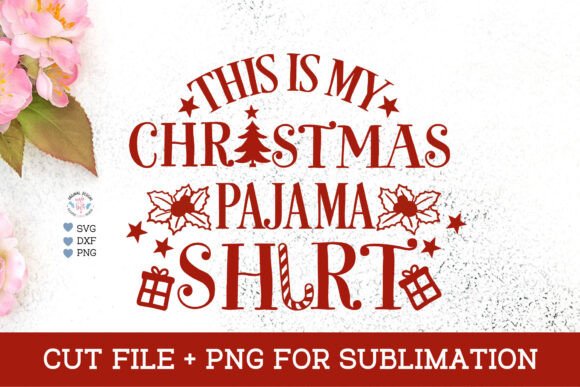
Let’s talk about this Christmas Pajama Shirt cut file and PNG. When a new design hits my inbox, I’m not just looking at it as a graphic; I’m picturing it stitched out, on a real product, under the lights of my studio or in the hands of a customer. This one comes across immediately as a cheerful, cozy holiday motif—it’s got that friendly, classic pajama shirt shape that feels nostalgic and warm.
The Visual Personality and Where It Belongs
The layout is straightforward and charming. It’s not overly complex, which is a huge advantage for an embroidery file. That simplicity means cleaner stitching, fewer potential thread breaks, and a design that reads well from a distance. The mood is festive but soft, perfect for holiday gifts and family-oriented products.
In my mind, I’m already placing it on a soft, cotton-blend sweatshirt for a holiday photoshoot, or as a small, sweet detail on the corner of a baby’s blanket. It naturally belongs to projects where comfort and celebration mix: custom apparel like pajama sets (of course!), aprons for cookie-decorating parties, pillow covers for a seasonal couch, or tea towels as a kitchen gift. For a small shop owner, this is a versatile graphic that can anchor a whole line of holiday merchandise—from embroidered patches to tote bags for carrying festive treats.
Considering the Stitch: Real Project Scenarios
Picture this real case: I’m preparing a last-minute batch of custom embroidered caps for a local boutique’s holiday pop-up. They want something festive but not too loud. This Christmas Pajama Shirt design comes to mind. Its shape is contained, with likely clear boundaries that would translate well into satin stitch outlines or a tidy fill stitch for the body of the shirt. On a curved cap surface, a design with too many tiny corners can be a nightmare, but this one appears manageable.
On a tote bag or a textured fabric like a knitted blanket, the design’s clarity will be key. I’d want to test the stitch density on scrap fabric first. A overly dense fill stitch in a large area on thin fabric could cause puckering, while on a sturdy tote bag canvas it would look rich and professional. This is where the practical judgment comes in—the design’s apparent detail level suggests it would adapt well, but you always need to run that test hoop.
Where to Use It, and Where to Be Cautious
This is a design I’d confidently use on mid-weight fabrics: cotton sweatshirts, linen apron fronts, standard pillow covers. It would shine as a personalized gift, embroidered onto a set of holiday pajamas for a family—the instant recognition and warmth add real value.
However, I’d be careful on very small hoop sizes. If the design is scaled down too much for a baby item’s tiny sleeve, any small details might get lost or become unstable in stitching. Similarly, on dark fabrics, thread color contrast is paramount. You’d need a well-planned palette—bright whites and reds—to keep it vibrant. On stretchy fabrics like some t-shirts, proper stabilizer is non-negotiable to maintain the shape.
The design also affects customer trust and brand consistency. If it stitches out cleanly, with crisp lines, it elevates the perceived quality of the entire handmade product. A messy, poorly-executed embroidery file can make a beautiful gift look amateurish. This Christmas Pajama Shirt design, by virtue of its clean graphic style, has the potential to stitch out very professionally, boosting buyer engagement in an Etsy listing or at a craft fair booth.
Practical Notes for the Embroidery Designer
Before loading this embroidery file, my routine kicks in. I’ll test it on both light and dark scrap fabric to check thread coverage. I’ll review the stitch density in my software preview—looking for any areas that might be too thick or too thin. I’ll confirm the hoop size needed; a design that fits in a common 4x4 or 5x7 hoop is a huge plus for efficiency.
I always inspect small details. If this graphic includes any tiny lettering or intricate decorative accents within the pajama shirt motif, I need to know if my machine and chosen thread weight can handle them. Running a black and white mockup helps see the design purely as shape, stripping away the color assumptions.
And crucially, I check the licensing. The product description mentions SVG files suitable for cutting machines, but for embroidery, we need the appropriate file format and clear terms. Is this Christmas Pajama Shirt cut file and PNG licensed for commercial embroidery projects? Can I sell the finished embroidered tote bags and sweatshirts, or is it for personal use only? That due diligence is part of the professional process. Never assume.
The Final Impression: A Cozy Asset for the Holiday Season
Overall, this Christmas Pajama Shirt design feels like a solid, festive asset. It carries a visual personality that’s gift-ready and business-friendly. For embroidery, its success will hinge on the technical execution—the file’s translation into clean stitch paths—but the graphic foundation is strong.
In the hands of a creative entrepreneur, it could become a signature holiday item: a beautifully embroidered patch on a child’s stocking, a centerpiece on a boutique’s limited-edition sweater, or a sweet detail on a wedding gift of personalized kitchen linens for a new home. It’s a design that, stitched well, would make a customer smile, because it feels familiar and happy. That’s the real test of a design’s value—not just how it looks on screen, but how it feels in the hand, after the stitching is done.